No Results Found
The page you requested could not be found. Try refining your search, or use the navigation above to locate the post.


Uniper is a company with over 12,000 employees that was created by the spin-off of E.ON’s water, coal and gas divisions. As a young company, Uniper focuses on modern IT infrastructures and offers its employees BYOD, among other things. On the other hand, the company also has a more classical IT approach, which has been adopted from the E.ON world.
One challenge was to find a suitable smartcard middleware for the company that meets the requirements of a modern IT infrastructure as well as the framework conditions of classic IT. Security and user-friendliness had to be taken into account.
Due to Uniper’s BYOD strategy, it was important that smartcards and tokens could also be used without additional distributed software. This was achieved with a certified minidriver. By using virtual smartcards, the costs for a secure infrastructure could be further reduced. The support of the virtual smartcards by the smartcard middleware means that no major interventions in other systems are necessary. The solution is used for all conceivable signature and decryption applications, for example for workflows and office documents.
The page you requested could not be found. Try refining your search, or use the navigation above to locate the post.
RWE is one of the largest energy suppliers in Europe. Among other things, the company operates several nuclear power plants. Given the company’s numerous critical infrastructures, it goes without saying that RWE places high demands on IT security.
In order to meet the statutory requirements, the company uses digital signatures based on smart cards to secure workflows and certain processes.

RWE uses the smartcard middleware SCinterface from cryptovision to address the used smartcards. In addition, this solution is also used for authentication on the PC. After introduction, digital signatures were introduced for further processes.
The page you requested could not be found. Try refining your search, or use the navigation above to locate the post.

Infineon is a German semiconductor manufacturer with over 40,000 employees. The company issues electronic employee ID cards, which are used at more and more locations for access control and access to IT resources (with the help of a PKI). Middleware that supports different generations of employee ID cards as well as heterogeneous IT platforms is required to connect the chips on the ID cards.

The smartcard middleware SCinterface from cryptovision proved to be ideal for the Infineon employee ID cards. With SCinterface, employees can use all PKI applications on all relevant platforms. For access to the building, the canteen and for secure and traceable access to IT resources, employees only need their employee ID cards (multifunctional ID cards).
Java Card, a proven technology for programming smart cards, plays an important role at cryptovision. As an open and manufacturer-independent system, Java Card supports cryptovision’s approach to always rely on open standards. The ePasslet Suite, cryptovisions framework for the realization of electronic ID cards of all kinds, is based on Java Card. This means that the ePasslet Suite is not dependent on the type of card used, but can be used on any Java Card operating system.
The Java Card operating system on which the ePasslet Suite is most frequently used is JCOP from NXP. NXP, a Dutch semiconductor manufacturer that emerged from the Philips Group, has therefore been an important partner of cryptovision for many years. NXP also offers the ePasslet Suite (under the name eDoc Suite) in its own product portfolio.
The page you requested could not be found. Try refining your search, or use the navigation above to locate the post.
The University Hospital Würzburg is one of the largest hospitals in Bavaria. In addition to more than 4,000 employees, there are numerous external IT users. Like every hospital, the University Hospital Würzburg attaches great importance to IT security, since patient data must be protected.
In order to meet the high security requirements, the University Hospital Würzburg has introduced strong encryption and authentication mechanisms based on digital certificates. These protect different medical IT applications. Wherever possible, private keys are stored on smart cards. Software keys are only used in exceptional cases. The University Hospital of Würzburg has set up a public key infrastructure (PKI) to manage the digital certificates.
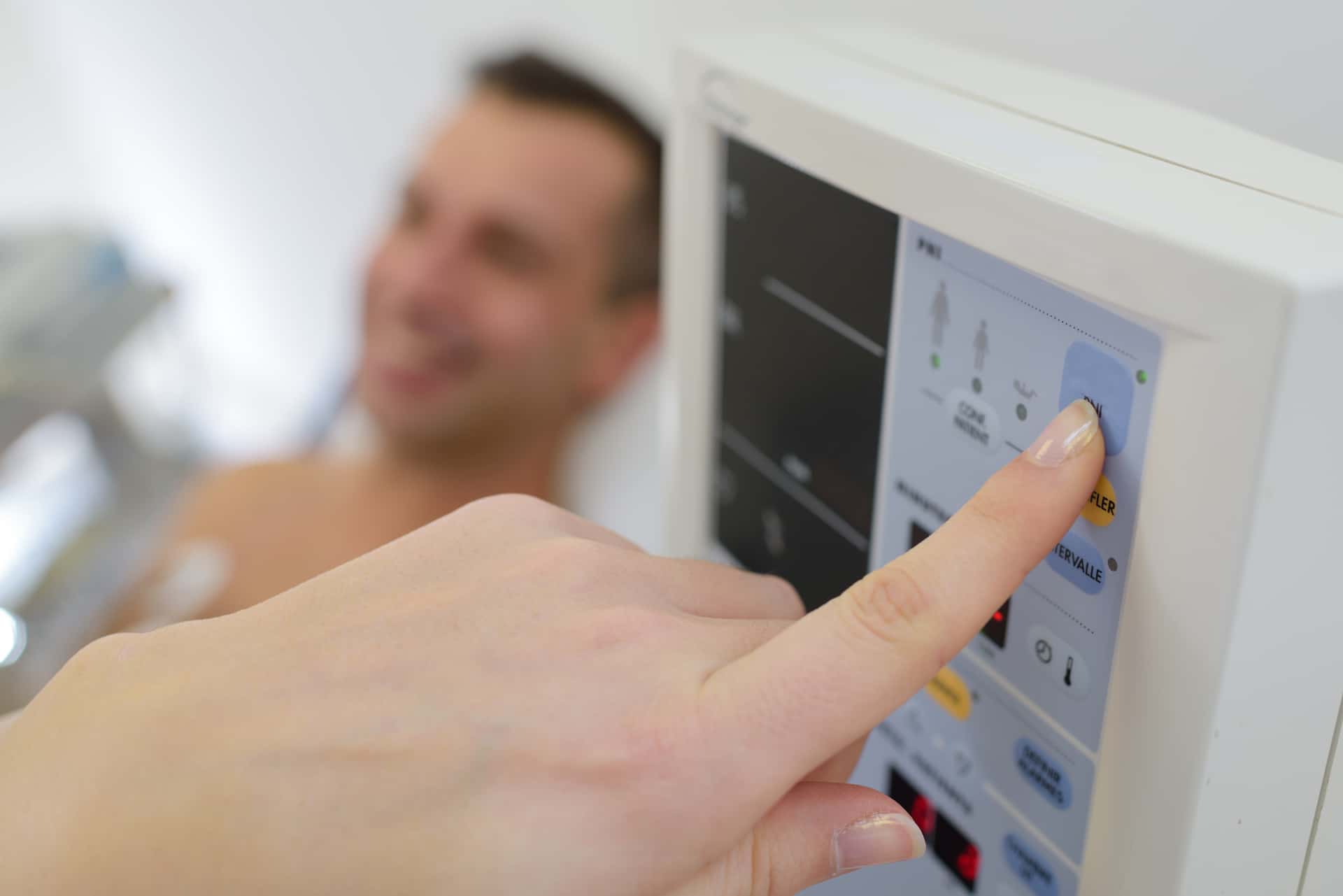
The certification authority (CA) of the PKI of the University Hospital Würzburg is operated with PKIntegrated by cryptovision. This high-end product proved to be optimal as it is seamlessly integrated into the identity management solution of Micro Focus used by the hospital.
Micro Focus’s identity management solution (with products such as eDirectory, Identity Manager and iManager) used to be a family of products from the US software giant Novell. Novell was acquired in 2010 and later merged into Micro Focus. cryptovision has been a partner of Novell and its successors for 15 years. The PKI solution PKIntegrated is seamlessly integrated into the identity management of Micro Focus. The University Hospital of Würzburg, a long-term Novell and Micro Focus customer, quickly realized that PKIntegrated was an ideal fit for its environment. PKIntegrated has been in operation there for over five years.
In addition to PKIntegrated, the University Hospital of Würzburg also uses the smartcard middleware SCinterface from cryptovision. This connects the PCs of the users with the cards. Another solution is a card management system from Nexus Technologies.
The University Hospital Würzburg is one of many cryptovision customers in the healthcare sector. Most of them are large hospitals with complex IT infrastructures that have to protect their data reliably without affecting the often life-critical work of their staff.
The page you requested could not be found. Try refining your search, or use the navigation above to locate the post.