
Sovereign and resilient digital identities: Why they matter now
Authors: Ralf König & Julia Zimmermann, Eviden Digital Identity
The accelerating pace of digital transformation is forcing organizations to rethink more than just efficiency and scalability — it’s about digital sovereignty. At the heart of this shift lie digital identities: the secure credentials that enable trusted communication, controlled access, auditability, and compliance in a connected world.
But in complex IT landscapes — especially those handling sensitive or classified information — managing these identities isn’t straightforward. Proprietary solutions, legacy systems, and fragmented infrastructures often lock organizations into rigid setups, making adaptation slow and costly.
Our new white paper, “Sovereign and resilient digital Identities,” provides a strategic roadmap for CIOs, CISOs, and IT leaders to build identity infrastructures that are secure, interoperable, and future-ready.
Inside, you’ll find:
- Dynamic access management strategies that replace static key ownership with real-time rights allocation.
- Governance models such as four-eyes approval and full audit logging for high-assurance environments.
- Automation-driven workflows for onboarding, certificate renewal, and key lifecycle management — because usability is a security factor.
- Standards-based architectures that avoid vendor lock-in and pave the way for post-quantum readiness.
Whether it’s ensuring secure classified communication, enabling role-based access across distributed teams, or integrating with multiple certification authorities, the principles outlined in this guide help you scale securely without sacrificing control.
In an era where regulatory requirements and technological change are constant, resilient digital identities are not optional — they’re a strategic necessity.
Download the white paper to explore how modular, standards-based solutions can strengthen your security posture, reduce operational complexity, and protect your organization’s technological sovereignty.
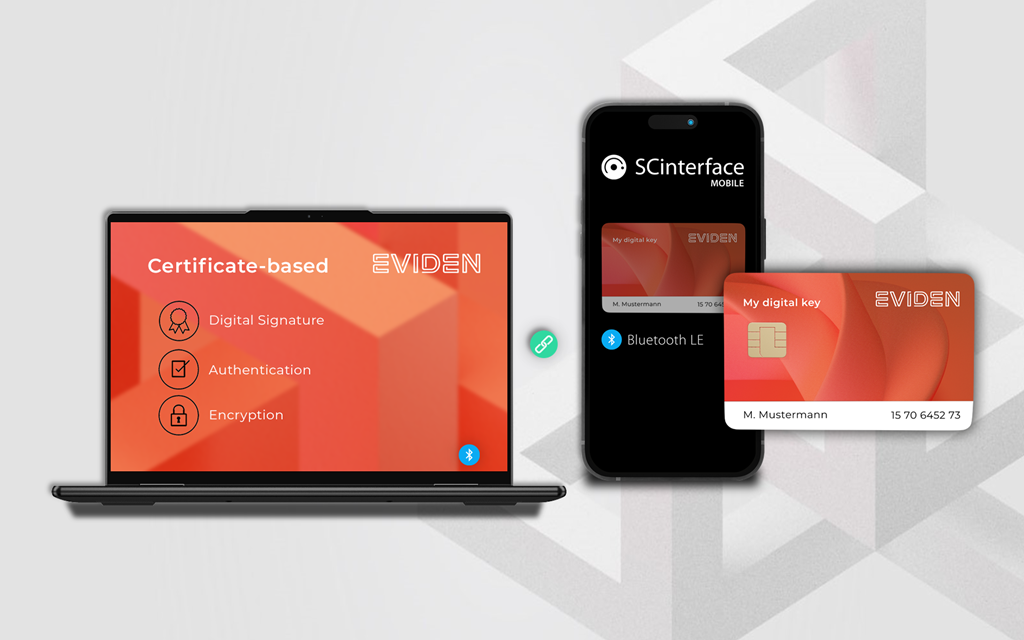
Cryptovision SCinterface integrates credentials from smartcards, tokens, remote tokens and virtual smartcards into common IT environments
With increasing security concerns, using only usernames and passwords for login is no longer considered secure. Better options like smart cards and security tokens provide stronger security measures. Smart cards, extensively used in banking and electronic IDs, demonstrate reliable security technology, with recent improvements like VSC and RSC making them even more effective.
The cryptovision SCinterface middleware provides a robust solution that is platform-independent and supports over 100 different chip types, operating systems and profiles. Additionally, it employs standardized protocols and high-quality cryptographic procedures. With RSA and ECC algorithms, cryptovision SCinterface supports procedures recommended by IT security authorities worldwide, facilitating the utilization of credentials across a wide variety of security devices.
Supported crypto interfaces:
- Microsoft CSP and Minidriver (for Windows)
- Apple Crypto Token Driver (for macOS)
- PKCS#11 (for Linux derivatives, Windows and macOS)
Product features such as platform independence, a modular architecture, the implementation of all major standards, support for (Microsoft) Virtual Smart Card and biometrics make cryptovision SCinterface one of the most diverse and innovative solutions of its domain.
www.cryptovision.com/en/scinterface-new